- Welcome to Pacific Bridge Capital
- Tel: 024.3516.1111
- Fax: 024.3684.1111
- info@pacificcapital.vn

How often do Vietnamese stocks fluctuate after the Dow Jones plunges?

164 mã giảm sàn trên toàn thị trường, VN-Index mất hơn 26 điểm, xuống mức thấp nhất kể từ tháng 10/2021
19/04/2022
Big profits, how do banks and securities companies contribute to the state budget?
14/09/2022The probability that VN-Index will drop immediately after the DJI plunge is quite high, but the reaction level is somewhat softer, even many times going backwards.
The US stock market has long been considered as a “thermometer” that most clearly reflects the heat of the global financial market because of its ability to react immediately to fluctuations in the world’s number one economy and the movements of the world’s number one economy. Fed policy changes. To a certain extent, the movements of the US stock market have affected most markets in the world and Vietnam is no exception.
Last night, fluctuations from the distant US once again made investors in Vietnam “lose sleep” when the Dow Jones Industrial Average (DJI) dropped to 1,276 points (-3.94%), strongly as of June 2020. The reason is attributed to higher-than-expected US inflation data with the consumer price index (CPI) in August increasing by 0.1% month-on-month and 8.3% year-on-year.
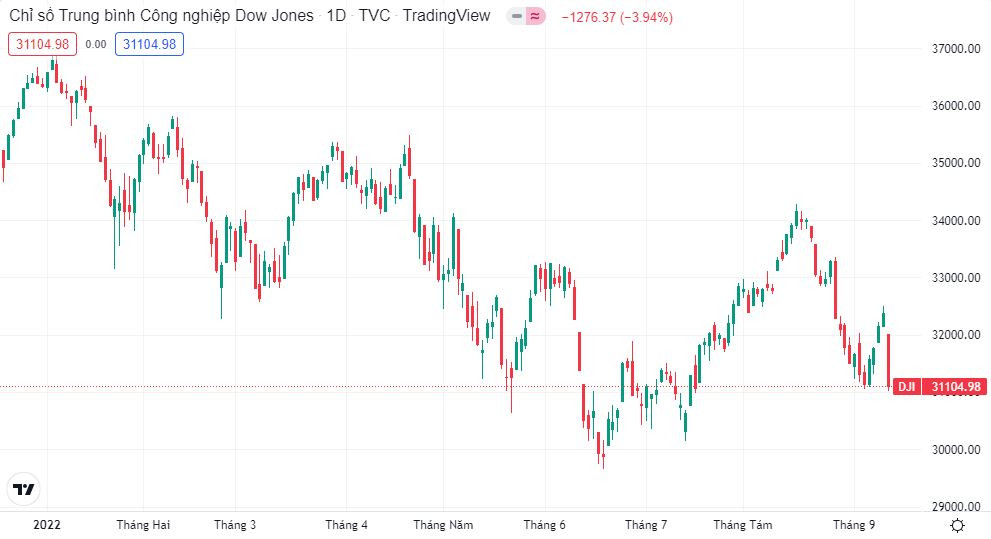
DJI’s biggest drop since June 2020
Psychological impact is inevitable despite the fact that the two markets are not always in sync. Historical data shows that VN-Index did not react too negatively after DJI’s plunge. According to statistics from 2012 to now, DJI has a total of 27 drops of over 3% per session. In the previous 26 times, VN-Index only had 6 drops of over 3% in the next session and even had 7 upstream times. Most of the remaining times, VN-Index only decreased by less than 2% or insignificant.
In particular, in both times when DJI dropped over 10% and had to suspend trading midway on March 12 and March 16, 2020, VN-Index only dropped less than 1% of the session right after. Or like on April 1, 2020, DJI dropped to 4.4% but VN-Index even increased strongly by 3.2% in the next session. It should be noted, however, that US stocks trade with no margin and short selling is allowed, so the intensity of the higher sell-offs is understandable.
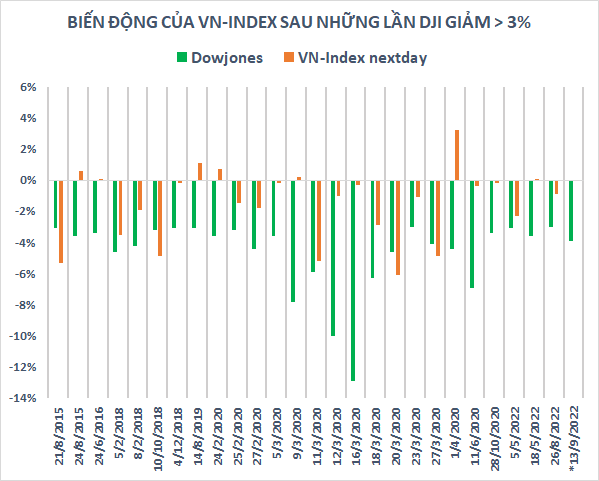
In general, the probability that VN-Index will drop immediately after the DJI plunge is quite high, but the reaction level is somewhat softer, even many times going backwards. Predicting exactly how the market will move is not simple and the factor that investors need to pay more attention to is how the story behind the plunge will affect Vietnam.
Inflation in the US is fundamentally different from inflation in Vietnam because of the difference in weighting in the basket of consumer price indexes. In fact, Vietnam is controlling inflation quite well while ensuring positive growth. The stable macro situation was also the driving force that helped Vietnam’s stocks go against the downtrend of the global financial market in August.
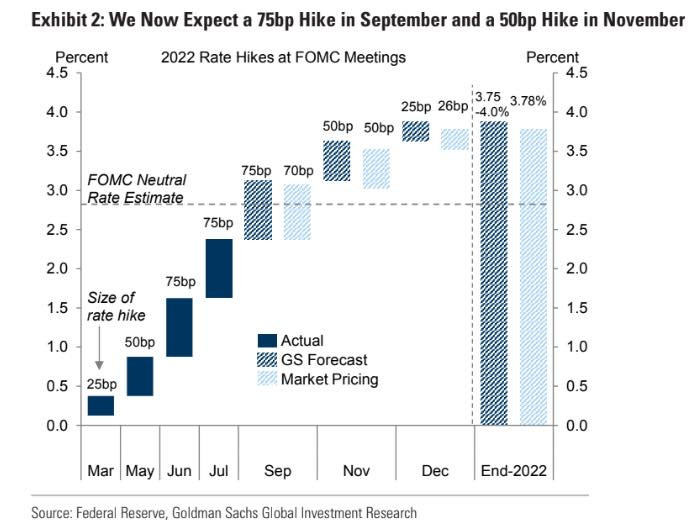
What worries investors is that the Fed will have more reason to hold a hawkish stance in conducting monetary policy. Earlier, Fed Chairman Jerome Powell had tough messages about stopping the escalation of inflation and emphasized that it would continue to raise interest rates and warned that this would cause “a little pain” for the economy. US economy. Previously, the Fed had a second consecutive interest rate increase of 0.75 percentage points at the last meeting in July.
In the latest report, Goldman Sachs forecasts that the Fed’s operating interest rate at the end of 2022 is 4%, which means it will continue to increase by 0.75 percentage points in September; 0.5 percentage points in November and 0.25 percentage points in December. The fact that the Fed has not yet made a move to stop raising interest rates in the short term will greatly affect the cash flow into high-risk financial assets and Stocks are no exception.
According to Dragon Capital’s forecast, Vietnam’s interest rates may continue their upward trend if the Fed continues to tighten monetary policy and raise interest rates to 4.0% in 2023, putting pressure on central banks. raise interest rates to protect the local currency as well as keep capital outflows from their countries.
Dollar Index surpassed 110 and hit the highest level in 20 years, creating pressure on currencies of developing countries and Vietnam is no exception. However, in the context of Euro trading below 1 USD, RMB touching 7.0 and Japanese Yen falling to 144, the lowest level in 24 years, the decrease of VND is reasonable and reflects the stability of the currency. Vietnam economy.
Vietnam’s position may be affected by global instability, but the domestic economy is still operating very well and is highly appreciated by many international organizations. After the S&P’s increase in credit rating to BB+, Vietnam continued to be upgraded to Ba2 by Moody’s with a stable long-term outlook. Dragon Capital forecasts that Vietnam’s economic growth can reach double digits in the third quarter and 7.8% this year.
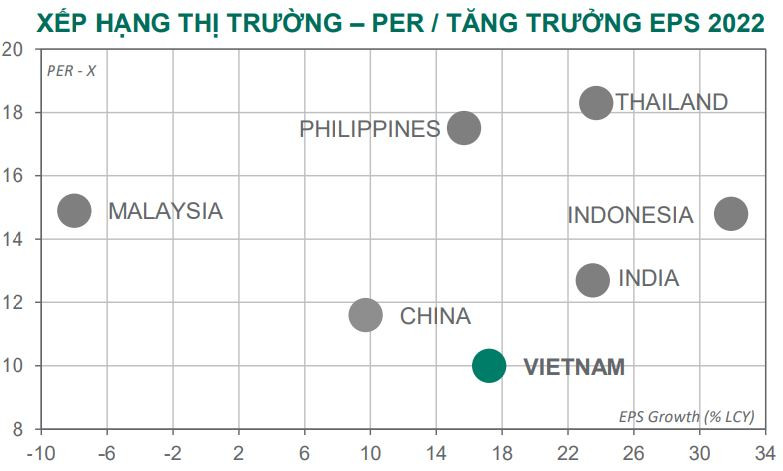
Dragon Capital believes that Vietnam’s economy will continue its strong recovery and growth while the stock market is at an attractive valuation with a PE of 10 times and EPS growth of 17%. Although growth may decelerate next year, this is only a slowdown, not negative growth. The Vietnamese market has outstanding profit/risk prospects among emerging markets.
Ha Linh/Market Lifestyle