- Welcome to Pacific Bridge Capital
- Tel: 024.3516.1111
- Fax: 024.3684.1111
- info@pacificcapital.vn

Impressions of the stock market in 2022: VN-Index fluctuated wildly, foreign investors returned to buy billions of dollars

Foreign organizations “temporarily lose” nearly hundred billion dong after 2 days as a major shareholder of VPD
23/12/2022
Reviewing the ‘turbulences’ on the stock market in 2022
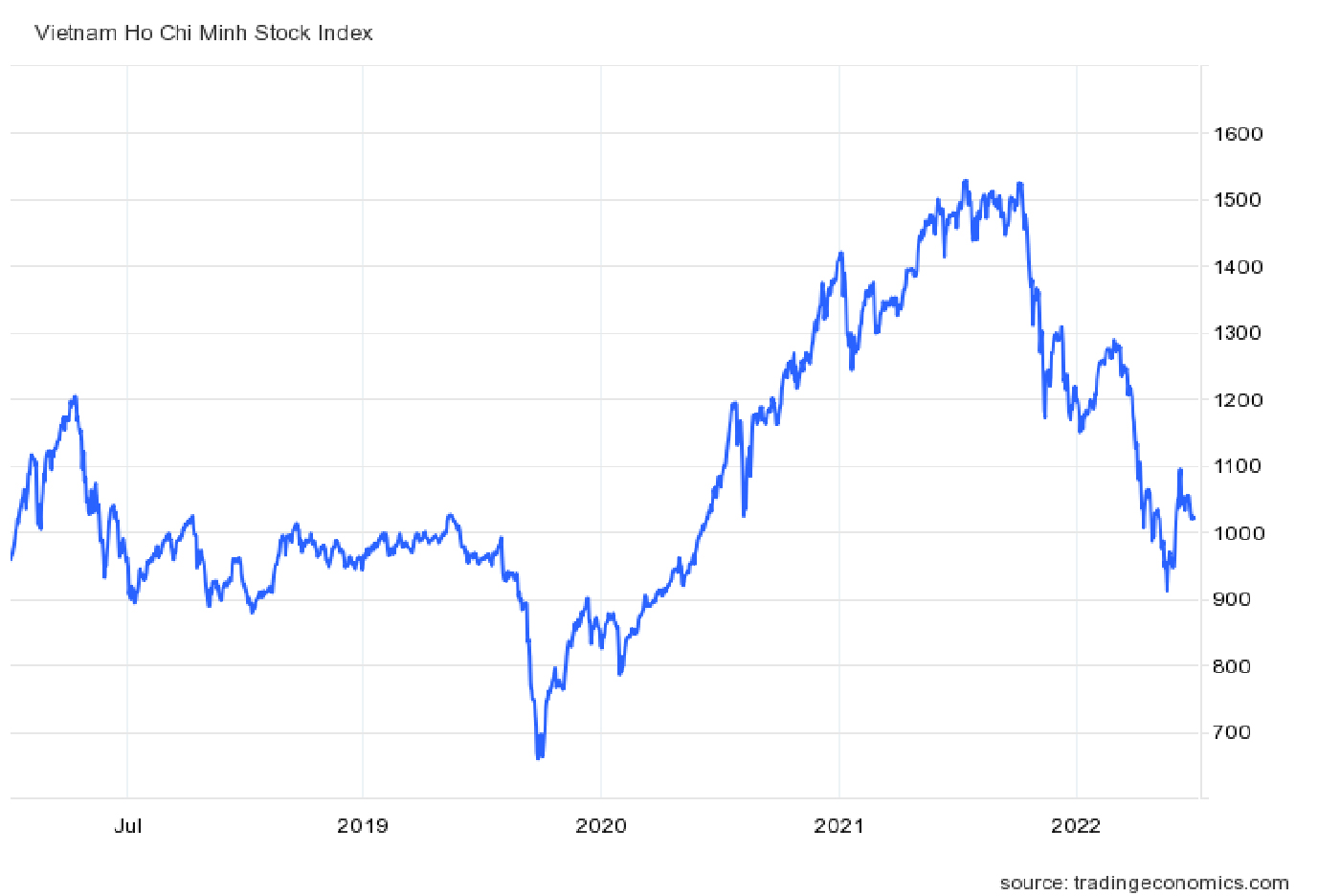
28/12/2022A tumultuous year for Vietnam’s stock market is about to end with many bold marks. VN-Index surpassed 1,500 points for the first time in history, but after just over half a year, it fell below 900 points. The unprecedented phenomena in history and many unprecedented records were established creating an unforgettable year for investors.

After many unsuccessful efforts at the end of 2021, the stock market suddenly broke out in the early days of 2022, the VN-Index for the first time in history closed above 1,500 points on January 6. The market then adjusted slightly and moved sideways near the peak before starting to decline from the beginning of April. Not only in terms of points, market liquidity also exploded with billions of shares traded each session. Matching value regularly exceeds USD billion, peaking on January 10 when the market liquidity exceeded USD 2 billion. This is a record number that Vietnam’s stock market has never touched in the past.
When the VN-Index was at the peak of history, the HoSE capitalization also set a new record, more than 6 million billion dong in the early days of April. The list of billion-dollar enterprises in market capitalization also skyrocketed to 61 names in which many New faces appear for the first time. However, the strong downward momentum then dropped many businesses in this prestigious club.

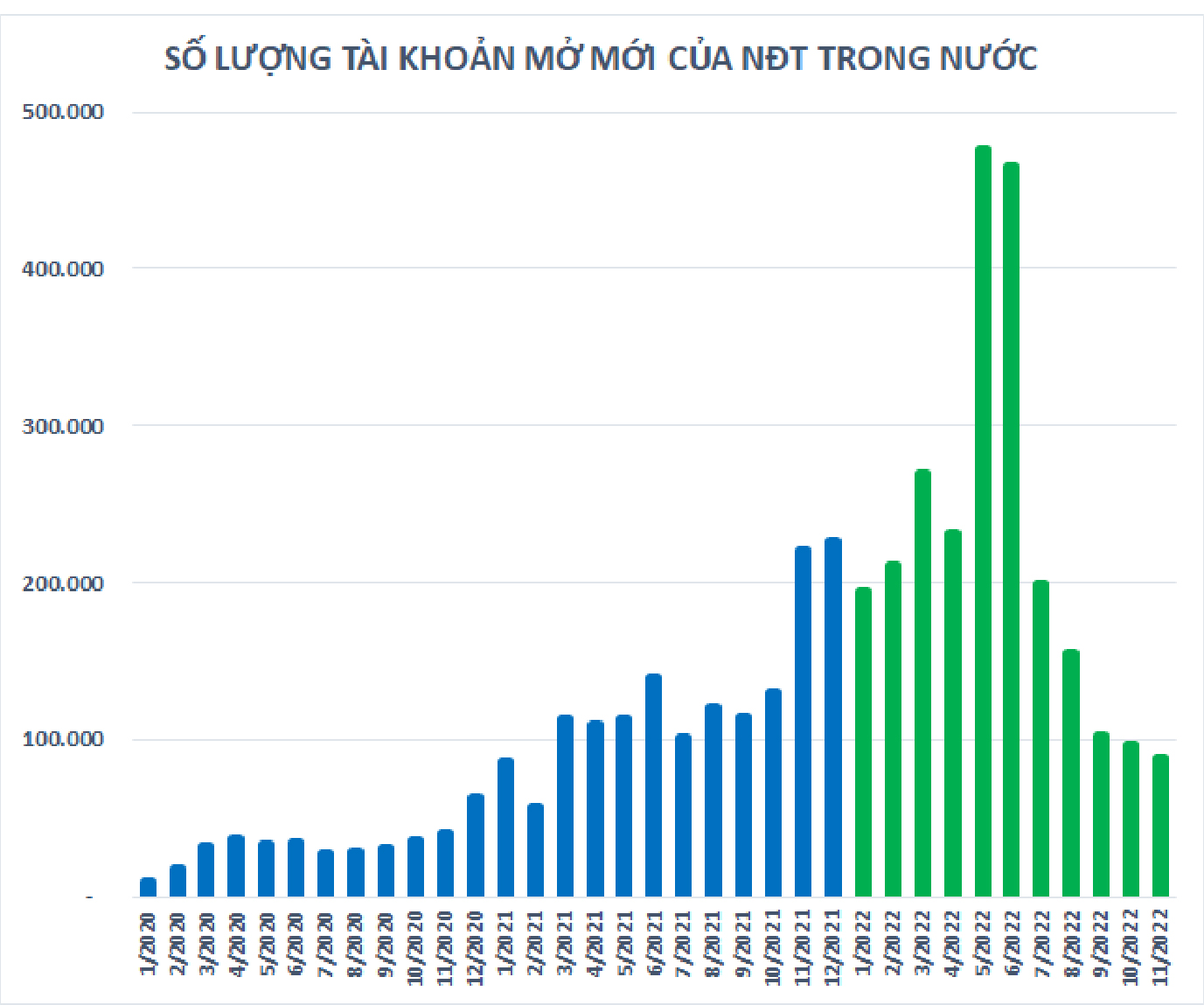
The unprecedented excitement was greatly contributed by the wave of new investors joining “massively”. At the peak in the period of May-June, domestic individual investors also opened nearly half a million new accounts per month. Although the heat has cooled down since the second half of the year, the overall number of new accounts opened since the beginning of 2022 still set a record.
In the first 11 months of the year, domestic individual investors opened nearly 2.5 million new securities accounts. This is the largest number in the market’s 22-year history, far exceeding the numbers of 2018, 2019, 2020 and 2021 combined. As of the end of November, the total number of individual investor accounts in the country exceeded 6.74 million accounts, or about 6.7% of the population.
The low interest rate environment in the first half of the year along with the expectation that the post-pandemic recovery of the economy will pull the stock market up has spurred domestic investors to participate in stock investment more and more. In addition, the application of eKYC also makes it easier for investors to open securities accounts.

In the context that the market is constantly heating up and the number of individual investors increases dramatically, the phenomenon of price manipulation, stock price manipulation or businesses deliberately circumventing the provisions of the law to issue and trade securities. securities appear more and more. This makes the management agencies have to take drastic actions to handle.
In the stock market, the price manipulation cases of Mr. Trinh Van Quyet – Chairman of the Board of Directors of FLC Group, Mr. Do Thanh Nhan – Chairman of the Board of Directors of Louis Holding and a series of leaders of Tri Viet Securities were exposed in turn. The determination to purify the market is reflected in the heavy fines, unprecedented in the past.
Not stopping, the illegal issuance of bonds was also strongly rectified by the management agency, such as the cases at Tan Hoang Minh Group or An Dong Company, a unit related to Van Thinh Group. Phat.
Although the short-term impact on investor sentiment is inevitable, it is undeniable that tightening discipline in the stock market is a necessary vaccine for the market.

In addition to drastic moves in tightening discipline on the stock market, in 2022 there are also many landmark changes to improve information transparency, maximum support for healthy investment activities.
Disclosure of proprietary trading data: On May 17, HoSE publicly and freely announced proprietary trading data. On May 20, HNX also started to publish. The disclosure of this important transaction data demonstrates the determination of the regulator in eliminating information asymmetry between retail and institutional investors.
Request for explanation of bare stocks/exchanges for 5 consecutive sessions: On May 16, the State Securities Commission issued an official document guiding the Stock Exchanges on requesting listing organizations and trading registration organizations to report, disclose information related to the company when the share price rises to the ceiling or drops to the floor in a row. This is one of the solutions to strengthen supervision, ensure publicity and transparency, especially after many price manipulation cases have been revealed before.
Changing the method of calculating the settlement price of the derivative maturity date: On the same day, May 16, the Securities Depository Center (VSD) decided to change the method of calculating the final settlement price (FSP) of futures contracts. ) VN30 index from “close value of the underlying index on the last trading day” to “simple arithmetic mean of the index over the last 30 minutes of the last trading day (including 15 minutes of continuous order matching and 15 minutes of closing periodic order matching), after excluding the 3 highest index values and the 3 lowest index values of the continuous matching session”.
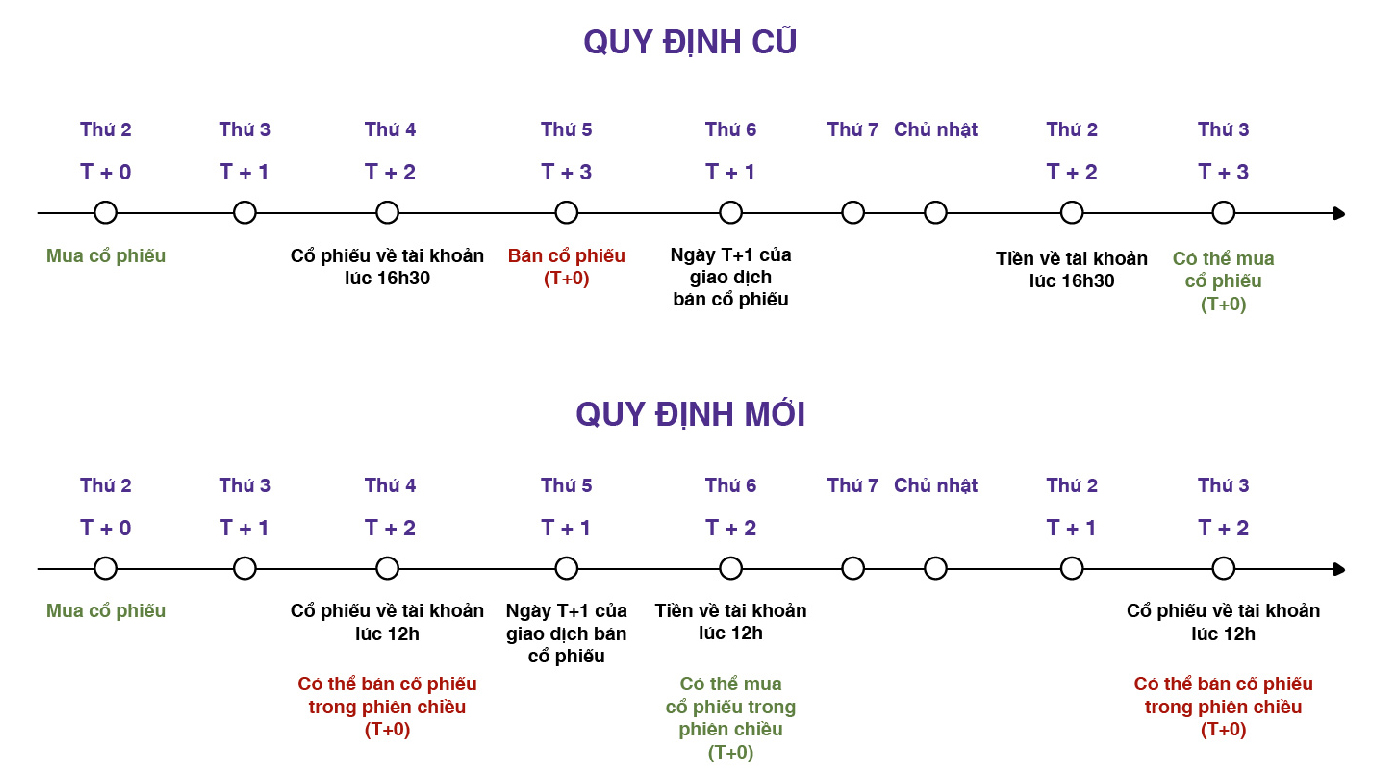
Shorten T+ transactions: On August 19, 2022, VSD issued a new clearing regulation specifying the time when the clearing bank (NHTT) completes the payment and VSD completes the payment of regulated securities. adjusted from 15h30 to 16h00 to 11h00-11h30 on T+2. As a result, investors who buy and sell securities on T+0 will receive securities and money before 13:00 on T+2 to be able to buy and sell securities in the afternoon session of the same day.
HoSE odd lot trading: From September 12, 2022, securities investors have been able to trade odd lots again on HoSE. Transactions are performed on a separate board, completely separate from even-lot securities transactions, odd-lot securities trading orders can only be matched and not matched with even-lot securities orders, so investors trade with odd lots is still not really as expected.
Raise the margin of derivatives: From December 15, VSD has adjusted the minimum initial margin from 13% to 17%, applied from December 15, 2022. The move is assessed to help the market reduce “speculative nature” as well as the influence of derivatives on the underlying market, thereby contributing to stabilizing investor sentiment.

Not only the stock market, the bond market also witnessed many important changes, especially after the Government issued Decree 65/2022/ND-CP on September 16, 2022 amending and supplementing a number of articles of the Government’s Decree No. of Decree No. 153/2020/ND-CP dated December 31, 2020 stipulating the private offering and trading of corporate bonds in the domestic market and the offering of corporate bonds to the international market.
Decree 65/2022/ND-CP amending the regulations on the purpose of bond issuance in order to strengthen the responsibilities and obligations of the issuer in using the proceeds from the bond issuance for the right purposes. investment programs and projects, debt restructuring of the enterprise, etc. The use of capital mobilized from the issuance of bonds of the enterprise must ensure the right purposes according to the issuance plan and public content. information disclosure to investors.
In addition, the decree also amends and supplements a number of key points, including the principle of bond issuance; stipulate clearly how to identify professional securities investors; supplementing regulations on representative of bondholders; amend the deadline for information disclosure, enhance transparency…

After a period of non-stop increasing, the stock market reached a peak and entered a prolonged correction starting in April. Notably, at that time the margin loan balance in the whole market was at a record high of more than 200,000. billions dong. The downtrend became more and more “fierce” when the wave of margin calls spread.
After cooling down in the second quarter, outstanding loans at securities companies suddenly increased again at the end of the third quarter to 165,000 billion dong (of which margin balance was about 155,000 billion dong). The increase mainly came from borrowing activities of business leaders, especially real estate group, to make up for the shortfall in capital due to tight bond issuance.
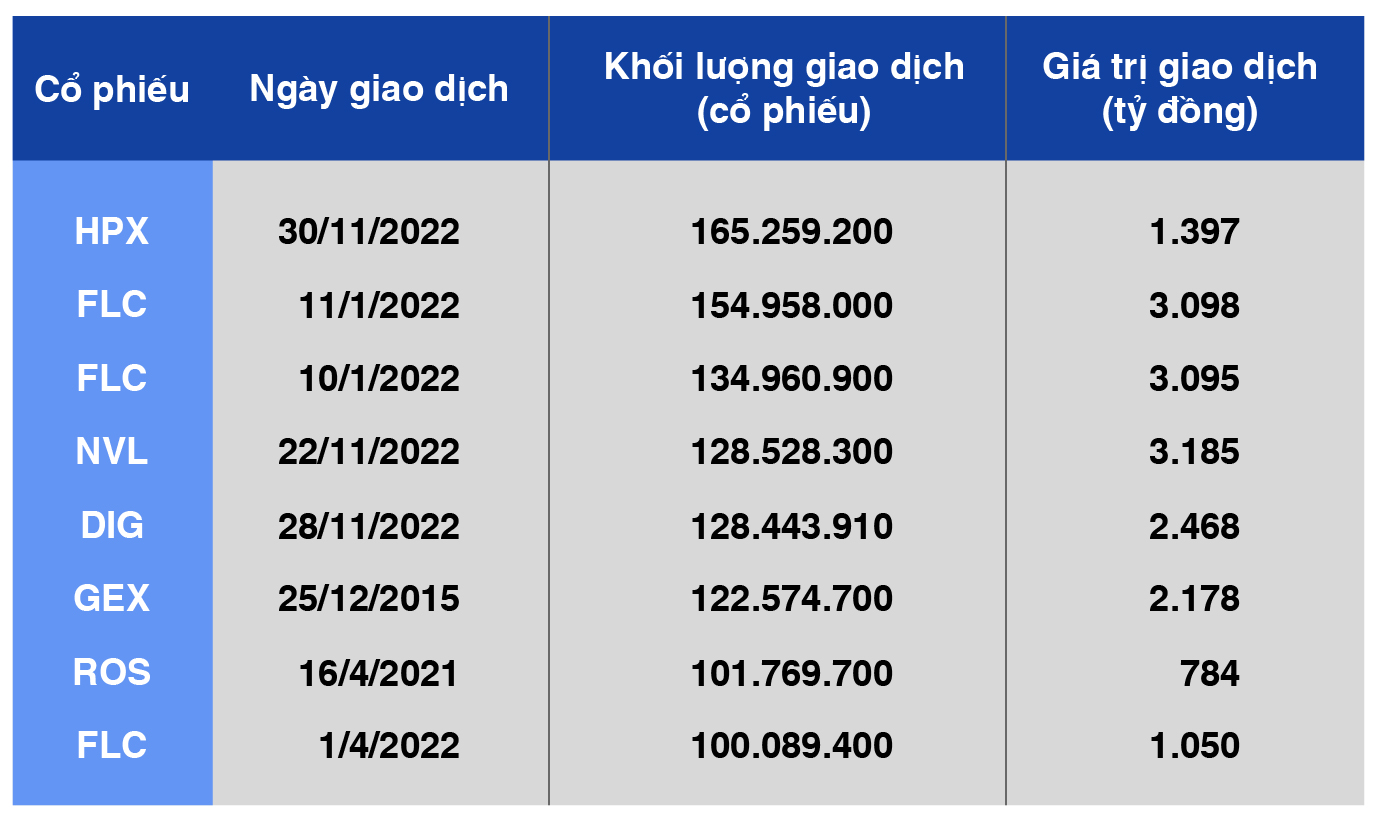
This contributed to the unprecedented wave of mortgage sales on many real estate stocks during the unfavorable market volatility in the first half of the fourth quarter. Some stocks even fell to the floor in a row. dozens of sessions with the “unprecedented” series of explanations. The volume of selling substance at the floor price was increasing day by day, leading to many past matching records being broken when stocks were rescued. The most notable was HPX with a matching session of more than 165 million shares, equivalent to 54% of the company’s total outstanding shares. This stock has officially surpassed “big names” such as FLC, NVL, DIG, GEX, ROS, thereby setting a record of trading volume in a session of Vietnamese securities.
In the past, matching sessions of more than 100 million units per share did not appear much and most took place in 2022. In November alone, this phenomenon happened twice on HPX and NVL.

With mixed impacts from both internal and external factors, Vietnam’s stock market has experienced a year of strong fluctuations. After just over half a year, VN-Index fell from a peak of over 1,500 points in early April to a 2-year low in mid-November. Even the index dipped to 874 points at one point before recovering and trading. balance around the threshold of 1,000 points.
Strong fluctuations occurred in a row, making VN-Index regularly ranked in the top of the world’s strongest increasing/decreasing indexes. At the time of bottoming, the index even topped all the charts of the world’s biggest decline in all popular time frames such as day, week, month, 3 months, 6 months, from the beginning of the year and a year.
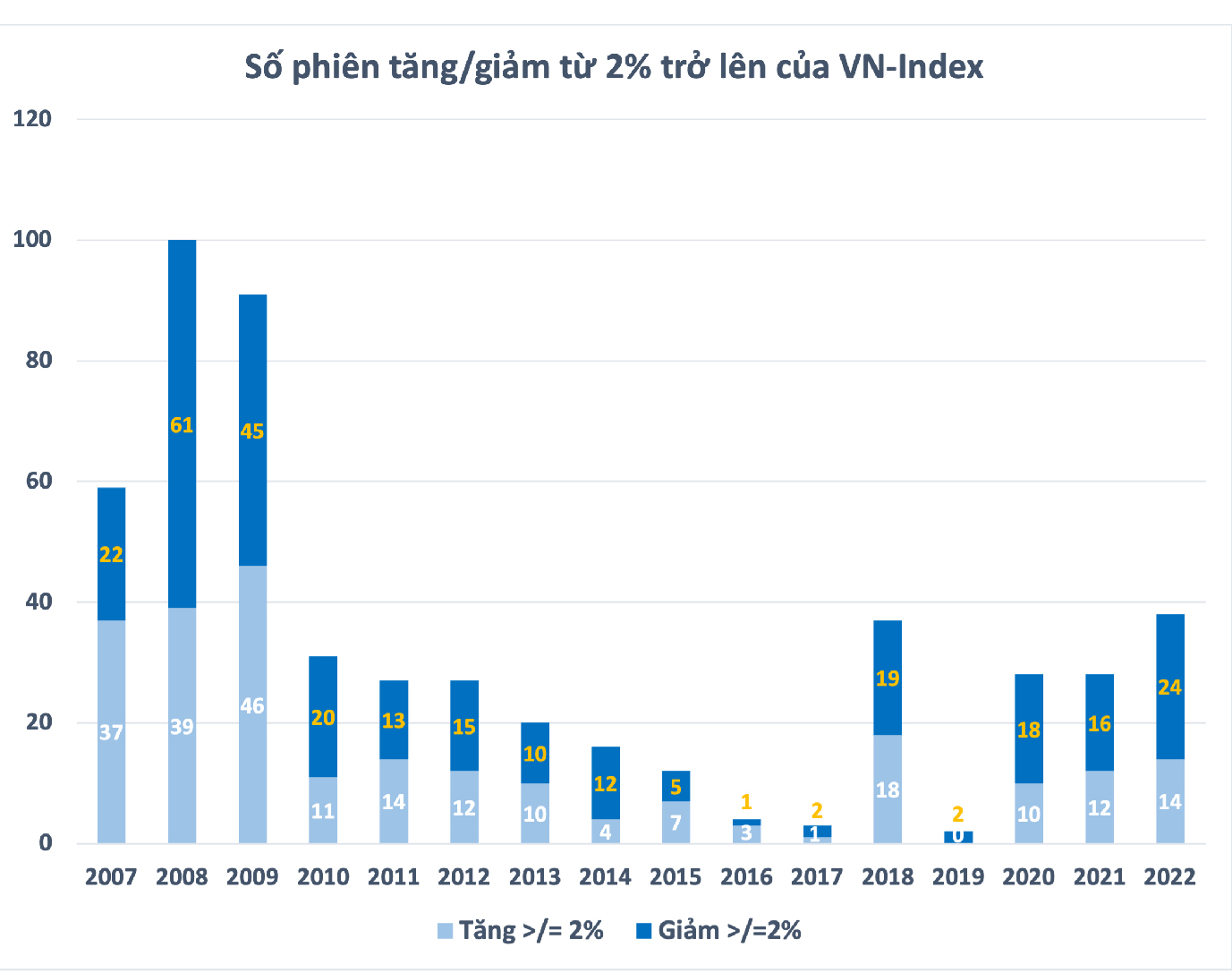
According to statistics, 2022 is the year VN-Index has the most increasing/decreasing sessions of 2% or more since 2009 with 38 times. In which, the index had 19 sessions with changes of over 3% with 3/4 skewed to the downside. Even, many trading sessions VN-Index also fluctuated up to more than 70 points (about 5-7%) along with a series of stocks “like peanuts” from ceiling to floor and vice versa. This partly reflects the highly speculative nature of Vietnamese securities.
These fluctuations have more or less surprised investors because Vietnam’s stock market has made much more comprehensive development steps than it did more than a decade ago. The current market capitalization has reached 4.5 million billion dong along with more than 700 listed securities codes including stocks, ETF certificates, warrants,… Market valuation is also was much more reasonable with the P/E VN-Index currently at 11.x times (the peak at 1500 was 17.x times).

To a certain extent, strong volatility with high speculative nature can be considered a “specialty” of frontier markets and Vietnam is no exception. In fact, in the announcement of MSCI’s market classification results in June 2022, Vietnamese securities once again missed the appointment with the upgrade to Emerging Market and had to temporarily stay in the marginal group. (Frontier Market).
The reasons given by MSCI include: Foreign ownership limit, remaining foreign room, equal rights of foreign investors, degree of freedom in the foreign exchange market, investment registration and account opening, market regulation, information flow, clearing and transferability. Worth mentioning, the minus points are similar to the report of MSCI in 2021.
Despite many delays, the issue of market upgrading is still considered as one of the important goals of Vietnamese securities in the coming time. According to many experts, the upgrade story of Vietnamese securities is only a matter of time, and can be completed in the period 2024 – 2025.

One of the important milestones marking the completion of the process of restructuring the organizational model of Vietnam’s stock market is the birth of the Vietnam Securities Depository and Clearing Corporation (VSDC) on the basis of transformation. Vietnam Securities Depository (VSD).
VSDC’s function is to perform registration, depository, clearing and settlement of securities; supervise the activities of registration, depository, clearing and settlement of securities transactions on the stock market in accordance with the provisions of the securities law; other functions and duties as prescribed by law and the Charter of organization and operation of VSDC.
The establishment of VSDC is considered as the next step after the establishment of the Vietnam Stock Exchange (VNX). The move represents an effort to perfect the management mechanism and organization of the market operation to ensure the market operates efficiently, fairly, openly and transparently, and to protect the legitimate rights and interests of organizations. , individual market participants.
This is also a strategic step to actively integrate into the international financial market, increase competitiveness and gradually narrow the development gap between Vietnamese securities and markets in the region and the world; more strongly deploying solutions to soon upgrade the market.

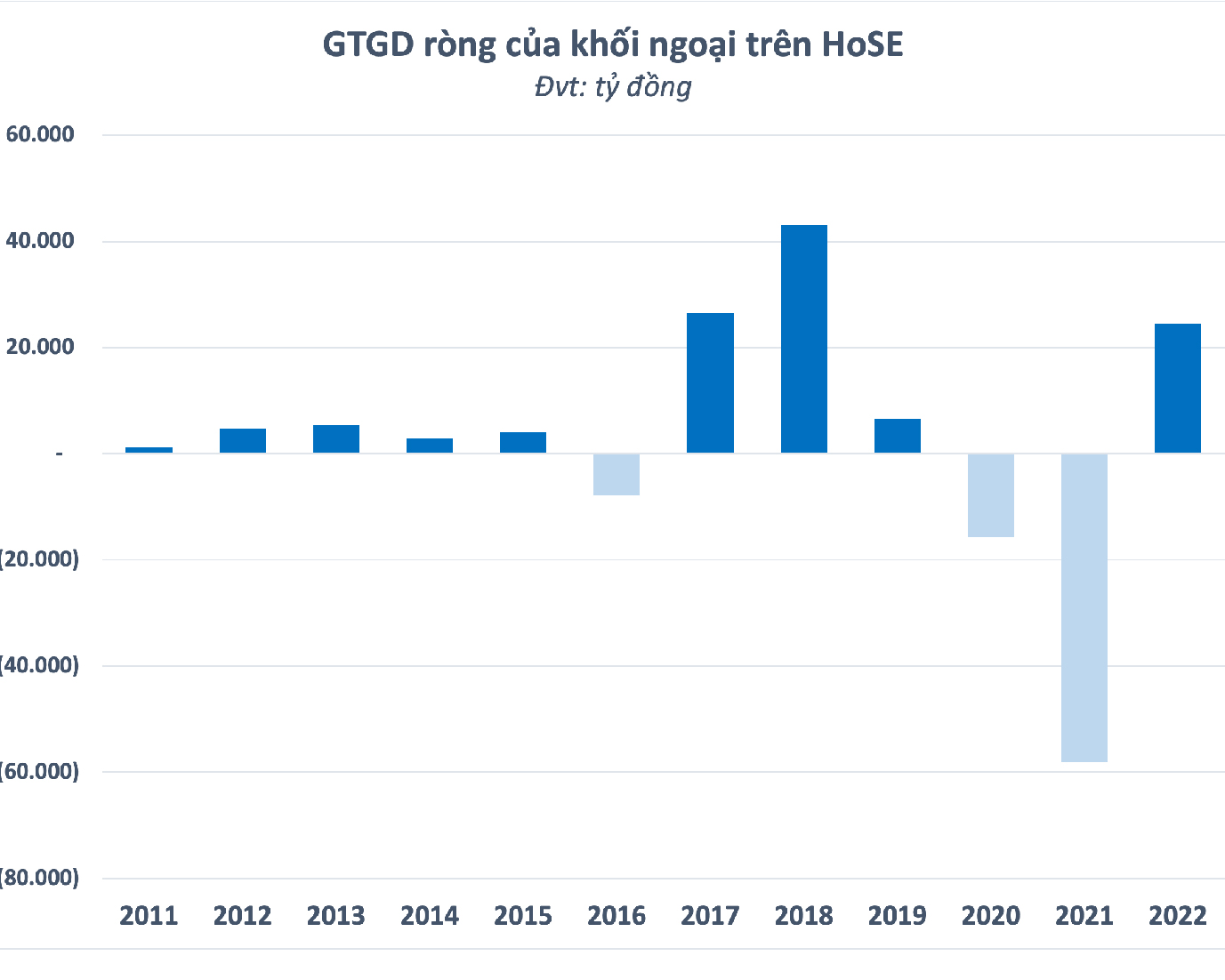
The upgrade is forecasted to help Vietnam’s stock market to attract foreign investors again after a period of continuous net selling for 2 years 2020-2021. In fact, despite once again failing to meet an upgrade date this year, there have been positive signs that foreign investors still appreciate the prospect of Vietnamese securities.
The most obvious proof is the continuous net buying in the past time with huge value. Only in the past 2 months, foreign investors have net bought 26,600 billion dong on HoSE, thereby reversing foreign capital flow into Vietnam stock market. Since the beginning of the year, foreign investors have net bought more than 1 billion USD of Vietnamese shares. Attractive valuation compared to growth potential is one of the factors driving the return of foreign investors.
Notably, ETFs are gradually asserting their leading role in leading foreign capital flows into Vietnam’s stock market. The Fubon FTSE Vietnam ETF – a magnet to attract money from East Asia or the duo DCVFM VNDiamond and DCVFM VN30 ETF being very popular with Thai investors are typical examples.
Basically, the ETF channel will be the investment trend of the future. In 2022, many new ETFs have been launched such as DCVFM VNMidcap ETF, KIM Growth VNFinselect ETF, CSOP FTSE Vietnam 30 ETF. New products bring more options with diverse “taste”, thereby contributing to attracting not only foreign investors but also domestic investors to invest in Vietnamese securities more and more.
Post: Spring, summer, autumn, winter
Design: Hai An