- Welcome to Pacific Bridge Capital
- Tel: 024.3516.1111
- Fax: 024.3684.1111
- info@pacificcapital.vn

Wind waves surround the shipping industry

World sugar price reached the highest level in 11 years, a sugar cane stock “breaks the top” in history
07/04/2023
PVI Insurance advanced VND 1.18 billion to pay compensation to the family of Bell 505 helicopter pilots
12/04/2023The impact of the reduction in sea freight rates will clearly affect the business results of Vietnamese shipping companies in the period of 2023-24.
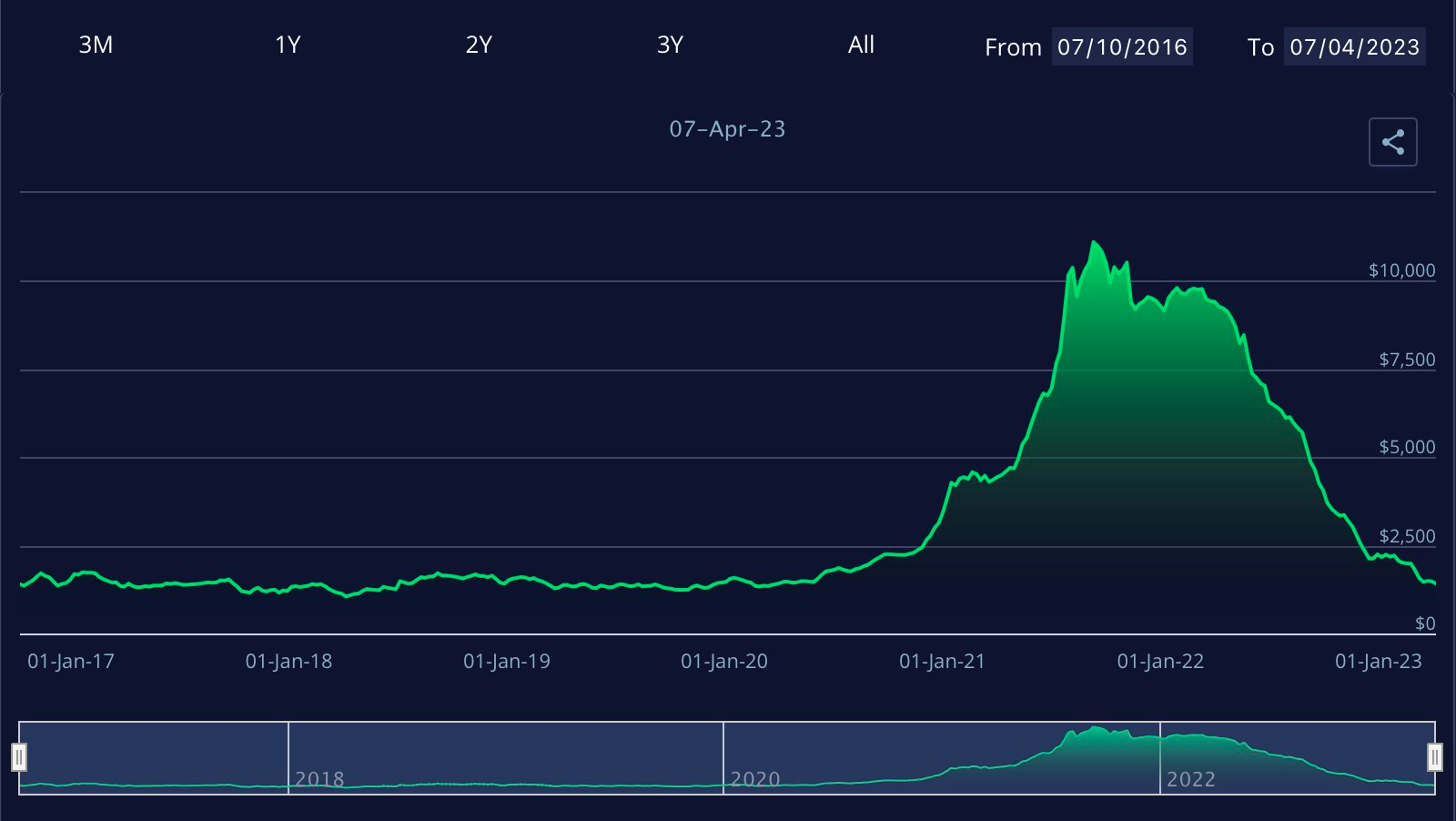
According to the Freightos Baltic Index (FBX), global container freight rates over the weekend fell to $1,416 for a 40ft container, the lowest level in more than three years since the end of March 2020. In fact, this index has continuously dropped sharply for more than a year. Compared to the peak, container freight rates have “evaporated” by 87%.
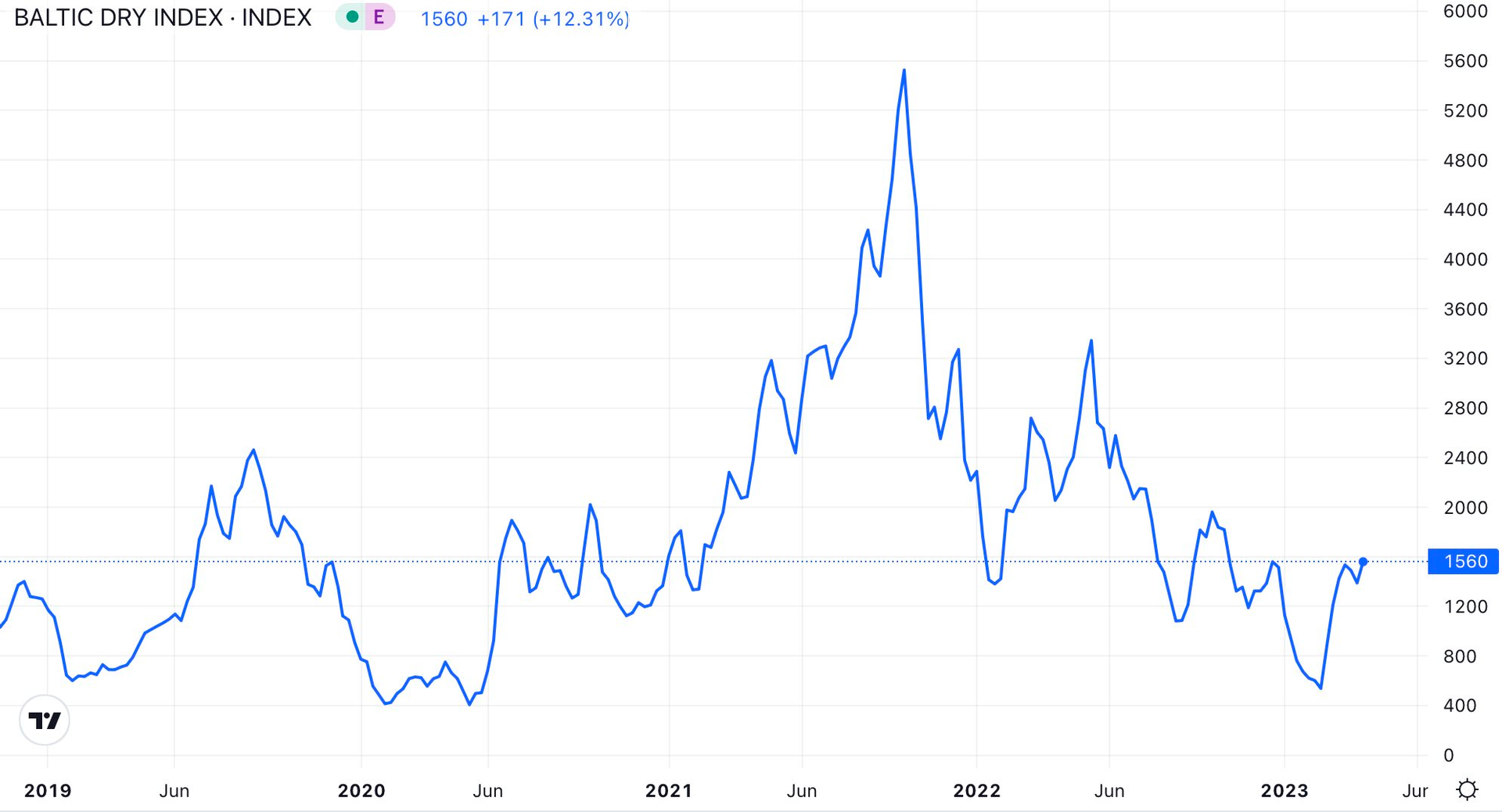
On the other hand, according to tradingeconomics, the Baltic Exchange Dry Index (BDI) – an index that measures freight costs worldwide, just ended last week at 1,560 points, its highest weekly close since mid-month. 12/2022. Before that, this index had continuously plummeted, thereby falling to the lowest level in nearly 3 years in February. Although it has tripled in the past 7 weeks, the BDI is still 70% below its peak in October 2021.
The recent recovery of ocean freight rates mainly comes from the expectation that China’s reopening will boost global trade and consumption. However, VNDirect believes that the oversupply will still put pressure on sea freight rates in the near future. This securities company believes that the global shipping industry will still face many difficulties in 2023 due to the economic downturn that negatively affects trade activities as well as shipping output.
Similarly, Mirae Asset also believes that the shipping industry will be under pressure from weak demand. Global economic growth in 2023 is forecasted to continue to face difficulties when central banks maintain increasing interest rates to bring inflation back to the target level. Tight monetary policy in the context that growth has not fully recovered from the Covid pandemic and the impact of the conflict in Ukraine is likely to lead to a recession in 2023.
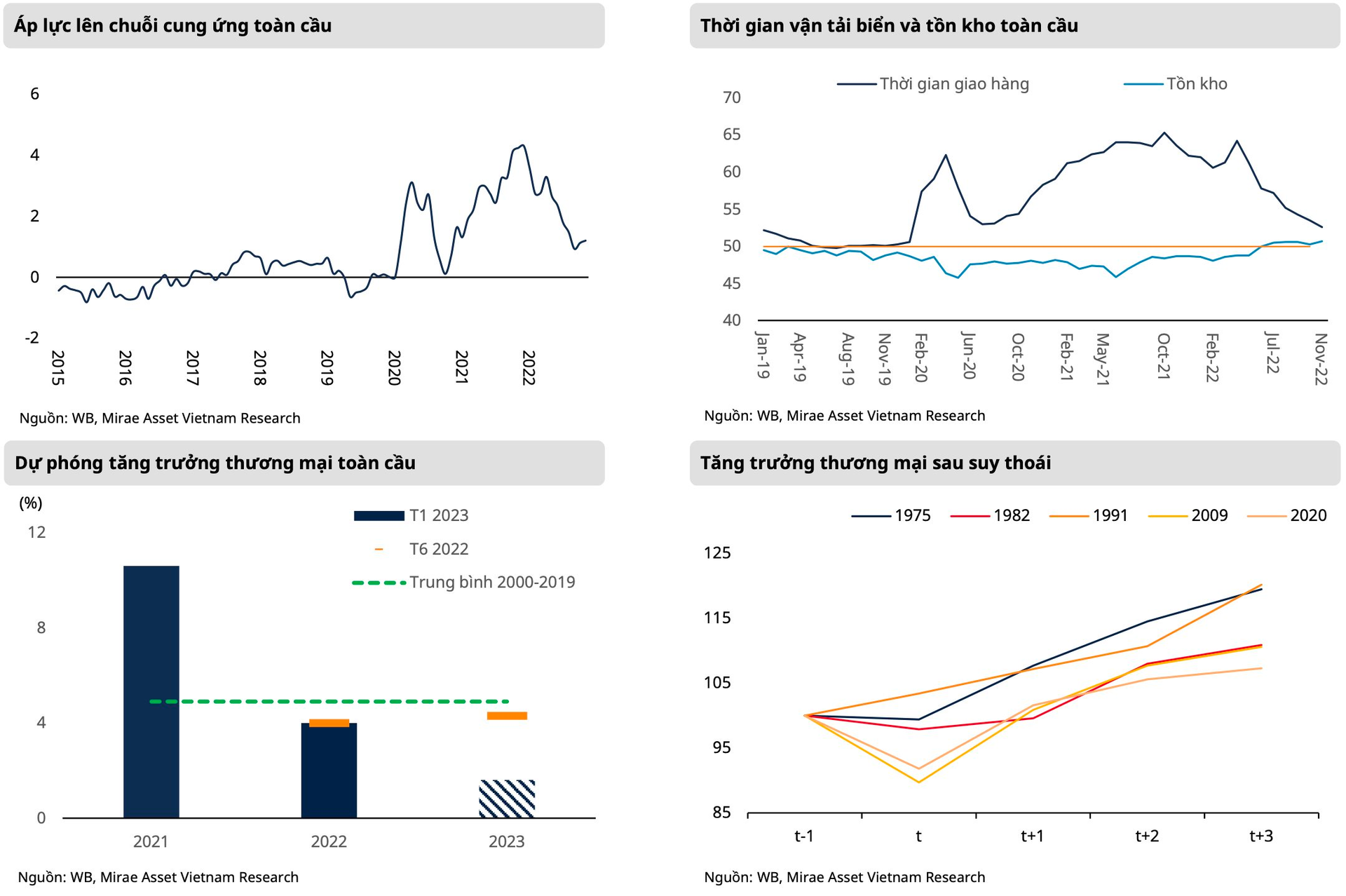
Global trade in 2023 is likely to grow at the slowest pace from 2021, after the COVID-19 pandemic, and much lower than the 2000-2019 average. The recovery of trade activity after the pandemic is at a lower rate than in other crises in the past.
Low growth combined with uncontrolled inflation is likely to reduce consumption demand in Vietnam’s main export markets, affecting import-export output and customs clearance. Mirae Asset forecasts that the import-export value and customs clearance will be difficult to maintain growth like in previous years and will likely be flat in 2023.
Careful business plan
Business results of shipping lines have a certain lag with fluctuations in sea freight rates because time charter contracts are usually signed from 6-12 months. Therefore, the impact of the reduction in sea freight rates will clearly affect the business results of Vietnamese shipping companies in the period of 2023-24.
Particularly in 2023, Mirae Asset believes that companies with the main revenue from providing shipping services will face greater competition and significantly lower profit margins than in the previous period. Anticipating difficulties and challenges this year, many shipping enterprises have carefully planned their business.
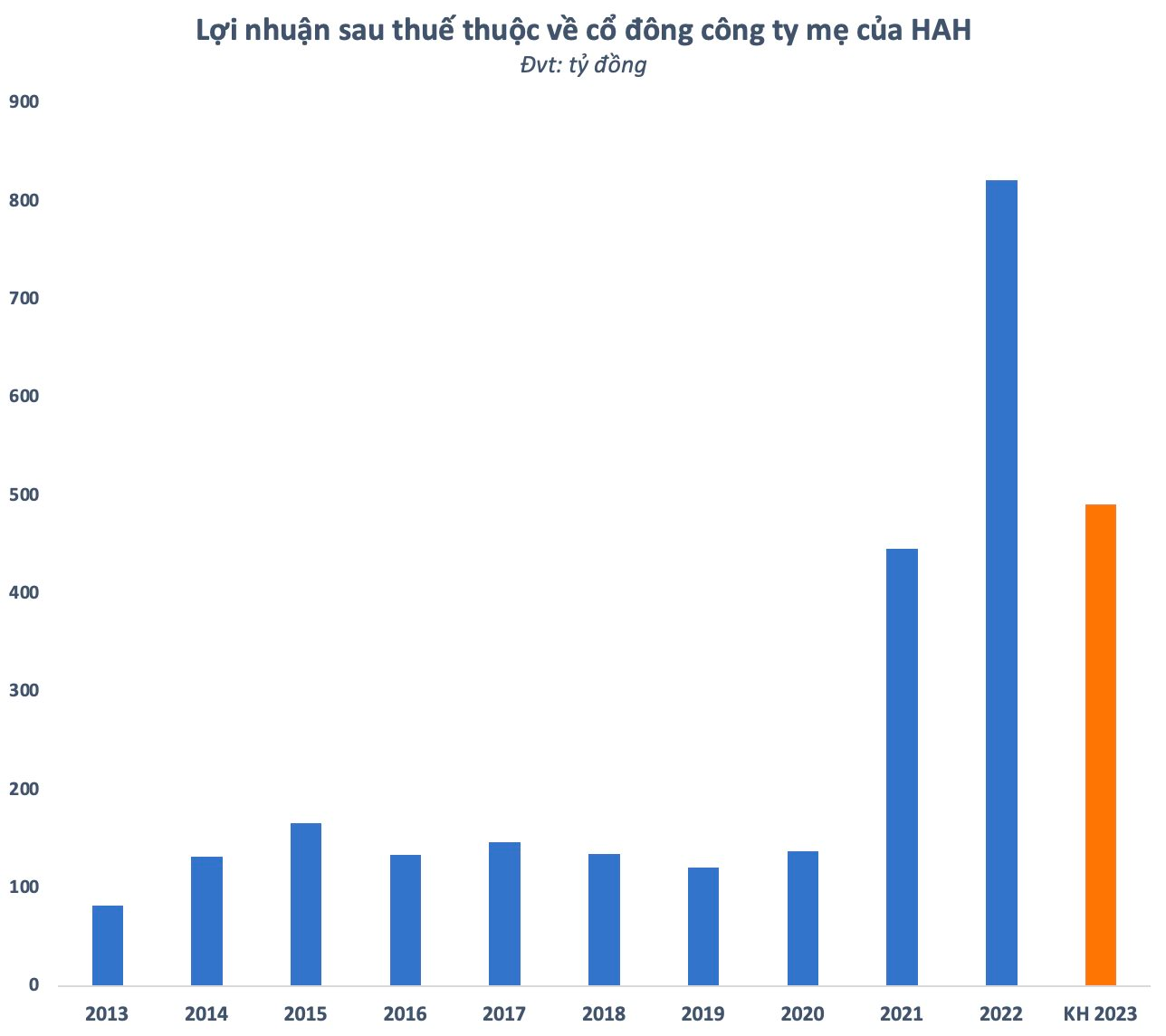
After a record year, Hai An Transport and Loading and Unloading ( HAH ) plans for production and business in 2023 with the goal of reaching a total output of more than 1 million TEU, of which port operation is 418,000 TEU; operating ships of 396,000 TEUs; Depot output 192,000 TEU. Total consolidated revenue is expected to reach VND 2,960 billion and profit after tax for shareholders of parent company is VND 492 billion, down 8% and 40% respectively compared to the previous year.
Vosco ( VOS ) also plans to reach 6.58 million tons of shipping volume, flat compared to the previous year’s performance. Total revenue in 2023 is expected to decrease by 37.7% over the same period, to VND 1,597 billion, of which transportation revenue will reach VND 1,506 billion. Pre-tax profit target was at VND 197.7 billion, down more than 67% compared to the previous year.
Meanwhile, Viconship (VSC) sets a target of seaport loading and unloading output reaching 1,150,000 TEUs, loading and unloading depots of 800,000 TEUs, loading and unloading warehouses of 1,200,000 m3, transporting cars of 1,300,000 TEUs, agents 5,500 TEU containers and 18,500 TEU logs. Correspondingly, the revenue target in 2023 is VND 2,250 billion, up 12% compared to the previous year.
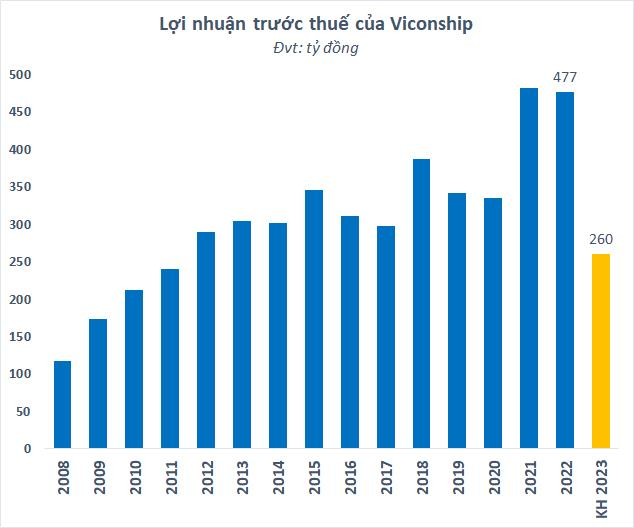
However, Viconship only targets pre-tax profit of 260 billion VND, down 45.5% compared to 2021 results. According to the company’s management, the financial targets for 2023 are affected by bank loan interest. In order to implement the investment program to receive the transfer, reaching the controlling rate of an enterprise in the seaport sector and the loss of investment in subsidiaries and associated companies is expected to be VND 240 billion.
VIMC (MVN) also believes that the market for bulk cargo ships and container ships will decline sharply due to high and increasing inflation in many countries, the global recession will affect the purchasing capacity of goods, the accumulated inventory of goods and services. store a lot. The Corporation sets a target of 17.7 million tons of shipping volume in 2023; seaport volume 134.7 million tons. Target consolidated revenue is 13,354 billion dong and profit before tax is 2,330 billion dong, down 7% and 23.7% respectively compared to the previous year.
Despite many challenges, VNDirect believes that there are still a number of positive factors that can partly reduce the negative impact of the price reduction. In addition to China’s reopening to boost global trade, the average Brent oil price is forecast to stay around $90 per barrel this year, which will help reduce fuel costs for shipping companies.
Ha Linh/Market Lifestyle