- Welcome to Pacific Bridge Capital
- Tel: 024.3516.1111
- Fax: 024.3684.1111
- info@pacificcapital.vn

Steel industry inventories increased slightly after the first quarter of the year, steel enterprises had a “headache” because of the price

Sea freight and ship rental rates fell sharply, Hai An (HAH) reported a 40% decrease in Q1 net profit compared to the same period last year.
28/04/2023
Textile enterprises ‘shrink’ both profits and labor
08/05/2023If the downward trend of steel prices continues, the reserve pressure will increase again on steel enterprises in the coming time, although the extent may not be as large as the record high inventory period in the middle of last year.
After two consecutive quarters of sharp decline, the steel industry’s inventory has inched slightly again after the first quarter of this year. Total inventory (including provision for devaluation) of steel companies on the stock exchange at the end of the first quarter was estimated at about VND68 trillion, an increase of VND2,000 billion compared to the end of last year.
In fact, after pushing inventories to a record level at the end of the second quarter of 2022, steel enterprises simultaneously reduced their stockpiles sharply in the second half of the year. Inventory of the entire steel industry as of December 31 fell to the lowest level since the first quarter of 2021. Although it increased slightly after the first quarter of this year, the inventories of steel enterprises were still much lower than the average in the period of the second quarter of 2021 to the third quarter of 2022.
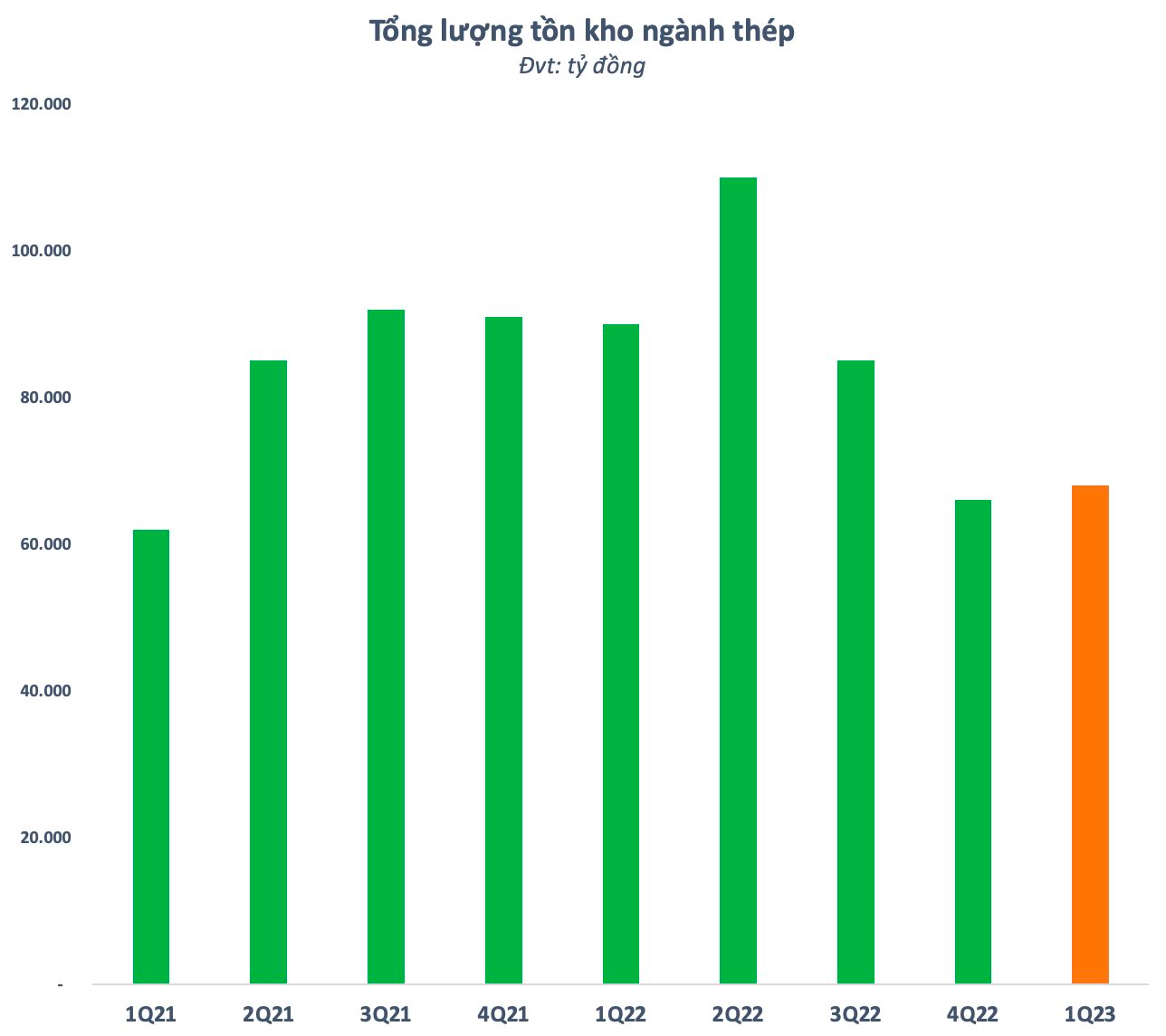
In general, the inventories of steel enterprises did not have much change after the first quarter of the year. Hoa Sen Group (HSG) is the only name with an increase of over 1,000 billion dong in inventory while the most stock-reducing company, Nam Kim Steel (NKG), also only has a decrease of more than 500 billion dong compared to the last time. last year.
In the first quarter, the inventory of “big brother” Hoa Phat (HPG) was almost flat at VND 34,000 billion, accounting for half of the total inventory value of the entire steel industry. Notably, the provision for devaluation as of March 31 of this business was less than 290 billion VND while the figure at the end of last year was more than 1,200 billion VND.

Not only Hoa Phat, most steel companies such as Hoa Sen Group, Nam Kim Steel, VnSteel (TVN), Pomina (POM), etc. have also sharply reduced their provision for devaluation compared to the end of last year. The uptrend of steel prices in the first 3 months of the year is the main factor that helps businesses reduce the pressure of provision for price reductions.
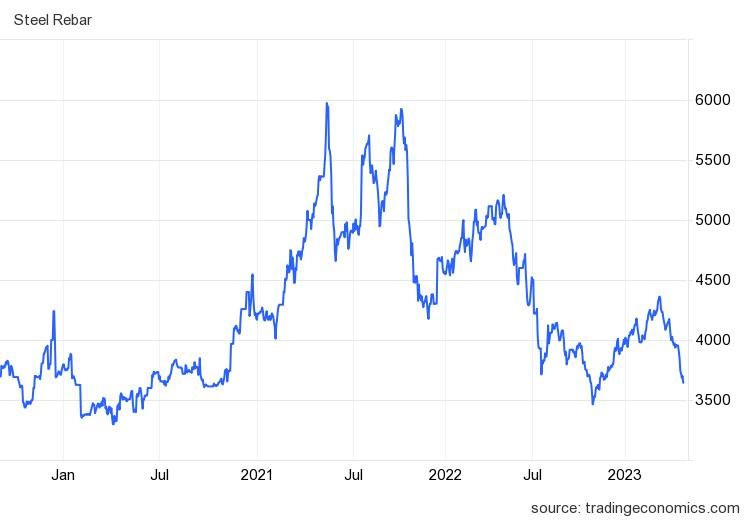
However, steel prices then showed signs of reversal and began to decline sharply from the beginning of April until now. The price of rebar in China has fallen to the lowest level since mid-November 2022; the price of some domestic steel has also decreased by about 1 million dong/ton in the past month. If this trend continues, the reserve pressure will increase again on steel enterprises in the coming time, although the level may not be as large as the period of record high inventories in the middle of last year.
Steel price level remains low
Commenting on the trend of this item, VCBS expects that Chinese steel prices will maintain the current low price level until the end of 2023 because (1) Steel demand has not recovered because the Chinese housing market has not yet recovered. signs of warming; (2) Steel manufacturing enterprises need to release a large amount of inventory when continuously re-opening factories while demand has not caught up, (3) factories in Turkey are closed due to earthquakes. greatly affect the actual supply.
Domestic steel price after a continuous decline went sideways at 14.5 million dong/ton (the lowest) and recovered slightly to 15.5 million dong/ton. This situation comes from (1) downward pressure on world steel prices; (2) The domestic demand for steel dropped sharply in Q3/2022, forcing manufacturers to lower their selling prices to speed up the sale of inventories; (3) The cost of steel production decreased.
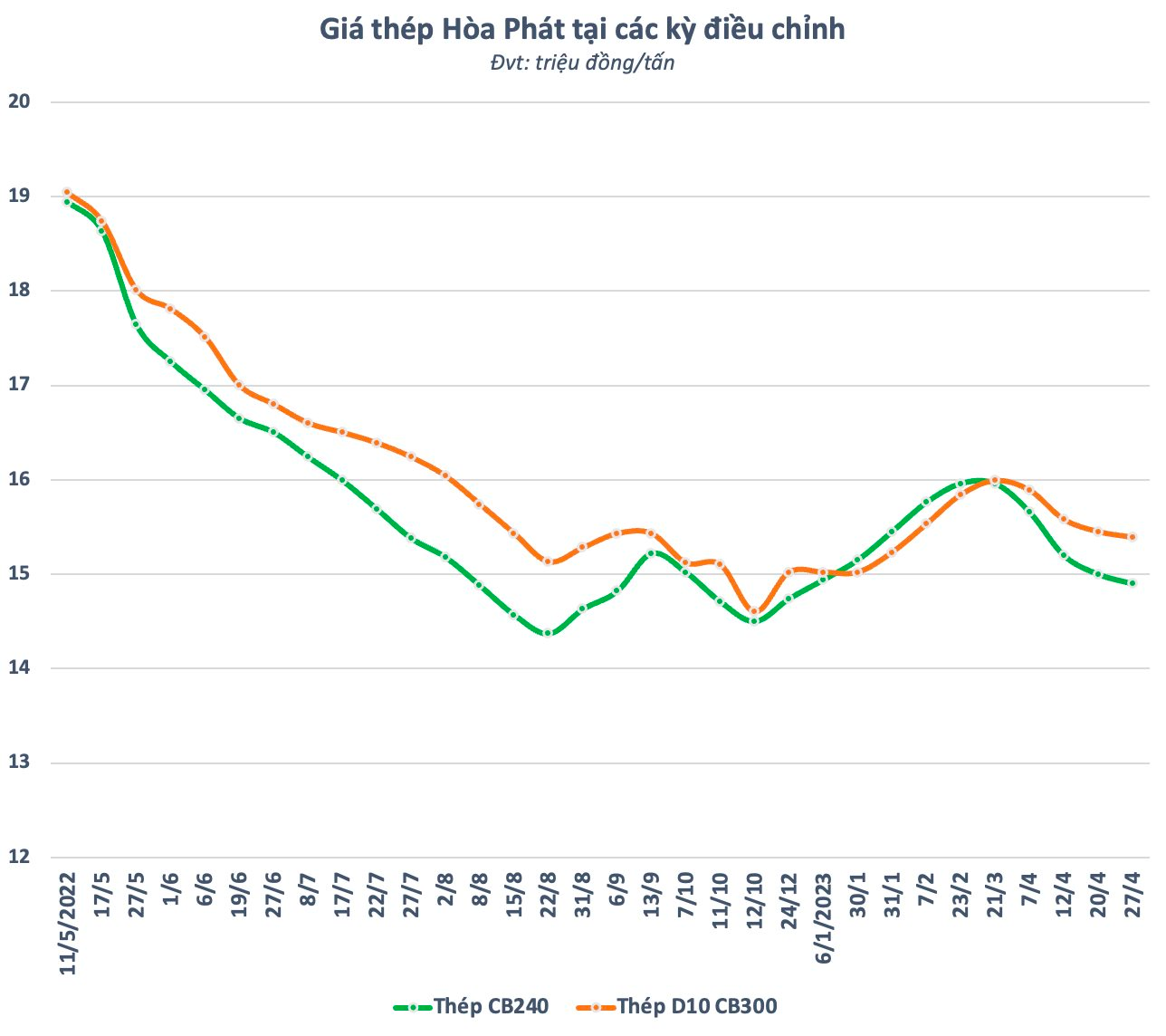
VCBS assesses that the steel price at 14.5 million VND/kg is already the bottom of the bar steel because at this price, steel producers using EAF electric furnace technology maintain their break-even gross profit margin or loss. However, the steel price cycle will fluctuate in correlation with China’s steel price as noted in the previous section and it is difficult to increase sharply in the near future.
Overall assessment of the steel industry, VCBS believes that the big barrier to the growth of the steel industry in 2023 comes from the difficulties of the real estate industry. This is the field that accounts for 60% of domestic steel consumption but is currently facing challenges due to difficulty in accessing new capital, legal risks still exist. Public investment is expected to support steel demand, but the contribution is not really significant because the proportion of steel in public investment is not much.
Ha Linh/Market Lifestyle