- Welcome to Pacific Bridge Capital
- Tel: 024.3516.1111
- Fax: 024.3684.1111
- info@pacificcapital.vn

VNDIRECT: Wind power becomes the focus, hydropower step out of favorable phase

Foreign investors still took advantage of “collecting” nearly 500 billion dong in a struggling market session
09/12/2022
The market recovered strongly, foreign investors slowed down their net buying
16/12/2022VNDIRECT emphasized that wind power will undoubtedly be the most exciting sector in the period 2022-2030 thanks to solid orientations from the government, supported by a sharp drop in investment costs.
According to EVN, the total electricity output increased sharply in August and September by 11% and 17% respectively from the low base level of 2021, helping the national output in the first 10 months of the year increase by 6.3% over the same period to 204, according to EVN. 5 billion kWh. However, this is still a lower growth rate than GDP growth and lower than forecasted growth rate in the draft Power Master Plan 8 (PDP 8).
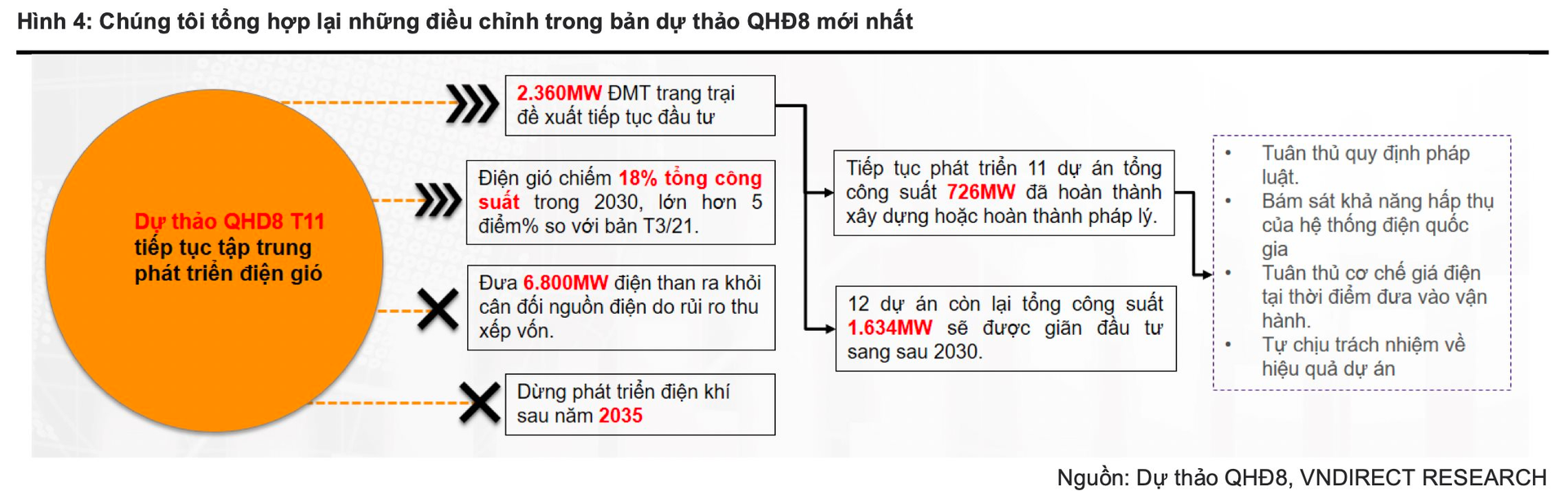
Renewable energy is eagerly waiting for a price policy push, and wind power is the focus of development in the period 2022-2030
In the recently updated power sector outlook report, VNDIRECT Securities assessed that the latest draft PDP8 continues to reinforce the bright prospect of renewable energy (RE). The new draft has absorbed and adjusted important information, which continues to increase the importance of RE. VNDIRECT maintains that this electricity segment will be the spearhead of Vietnam’s electricity development plan in both the short and long term.
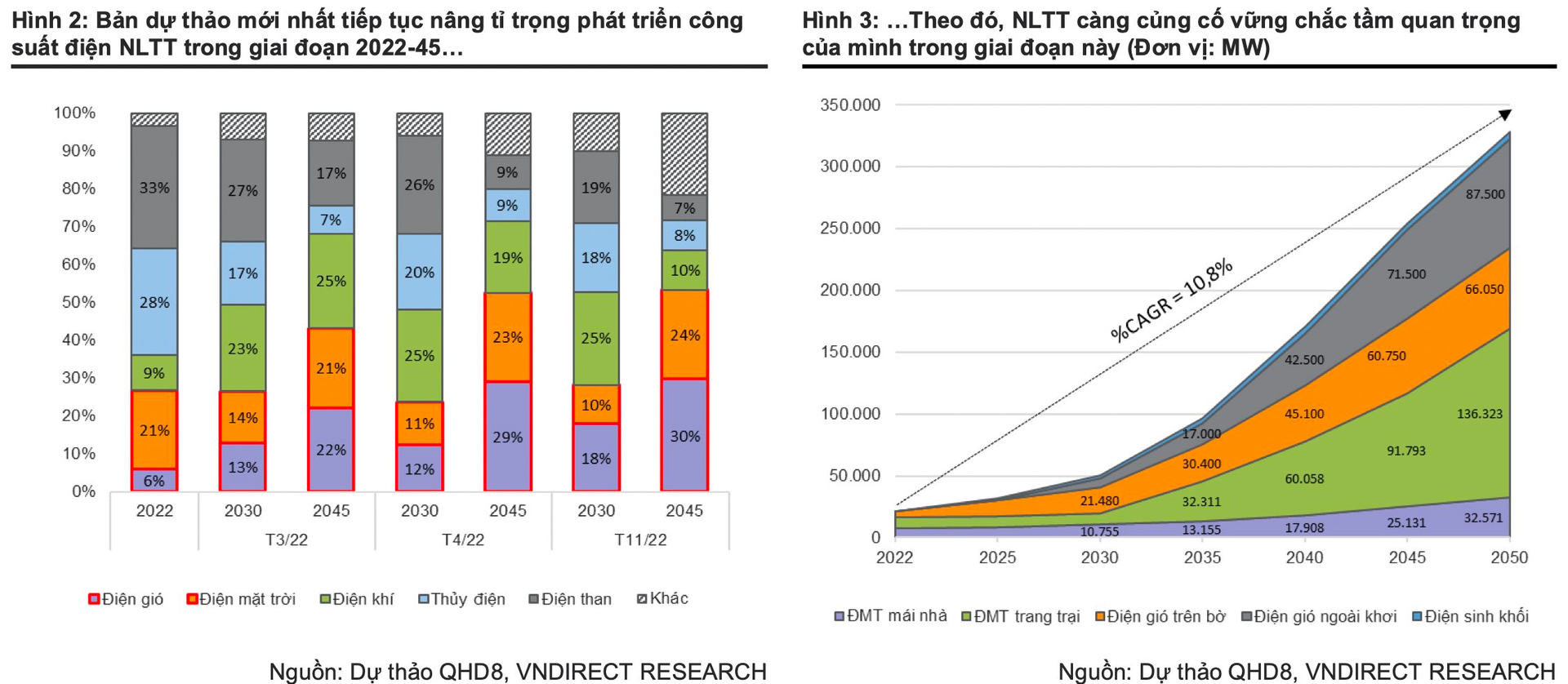
For wind power, the November draft continues to emphasize the importance of wind power with a large proportion in the period 2022-2050. Accordingly, there will continue to be a hot development phase of this power source after the FIT race period ends. It is expected that the compound growth rate of wind power capacity will reach 16% in the period 2022-2045. In general, the total wind power capacity is expected to account for 18% of the total system capacity in 2030, then will continue to own the highest proportion of 30% in 2045.
In another aspect, VNDIRECT recognizes that the downward trend in cost of LCOE (LCOE) is also an important factor, promoting the boom of wind power in the future.
For farm solar power , after the massive development phase, this power source will be stopped from new development from now to 2030. The latest draft PDP 8 encourages the development of rooftop solar power projects for the purpose. intended for self-use and not for sale on the net. The Ministry of Industry and Trade is working with stakeholders to develop a policy framework to further develop these projects.
On the other hand, the trend of mergers and acquisitions (M&A) will play an important role in shaping the outlook of the RE industry after the FIT price period. Many foreign investors are seeing the great potential of the RE sector in Vietnam, and a series of large corporations from Thailand and the Philippines have approached the domestic market through many flexible investment forms. . When the picture of the power industry is gradually getting clearer, focusing on developing RE, VNDIRECT believes that the M&A trend will become more and more popular in the coming years. Competition in this period will increase with many investors coming from many parts of the world, therefore,
Thus, it can be seen that price competition and investment costs will be the main topics in the coming years, helping to increase market efficiency as well as attract participation in the industry. From here, large-scale enterprises will have many advantages in price negotiation, especially in the context that the retail electricity market is gradually being formed.
Enterprises with extensive experience in the development and operation of RE projects will have better bidding capacity thanks to their effective and cost-effective management capabilities as well as the potential to access large capital sources at low cost. cheap fee . These are the decisive factors for expanding the portfolio and owning a larger “piece of cake” in the industry.
VNDIRECT believes that the decisive factor to evaluate the prospects of renewable energy enterprises depends on the ability to develop new capacity, which is currently impossible without a new pricing policy after the FIT price. end. The urgent promulgation of a new pricing mechanism will remove bottlenecks and create ideal conditions for the development of renewable energy sources in order to achieve Vietnam’s very ambitious goals in the coming time.
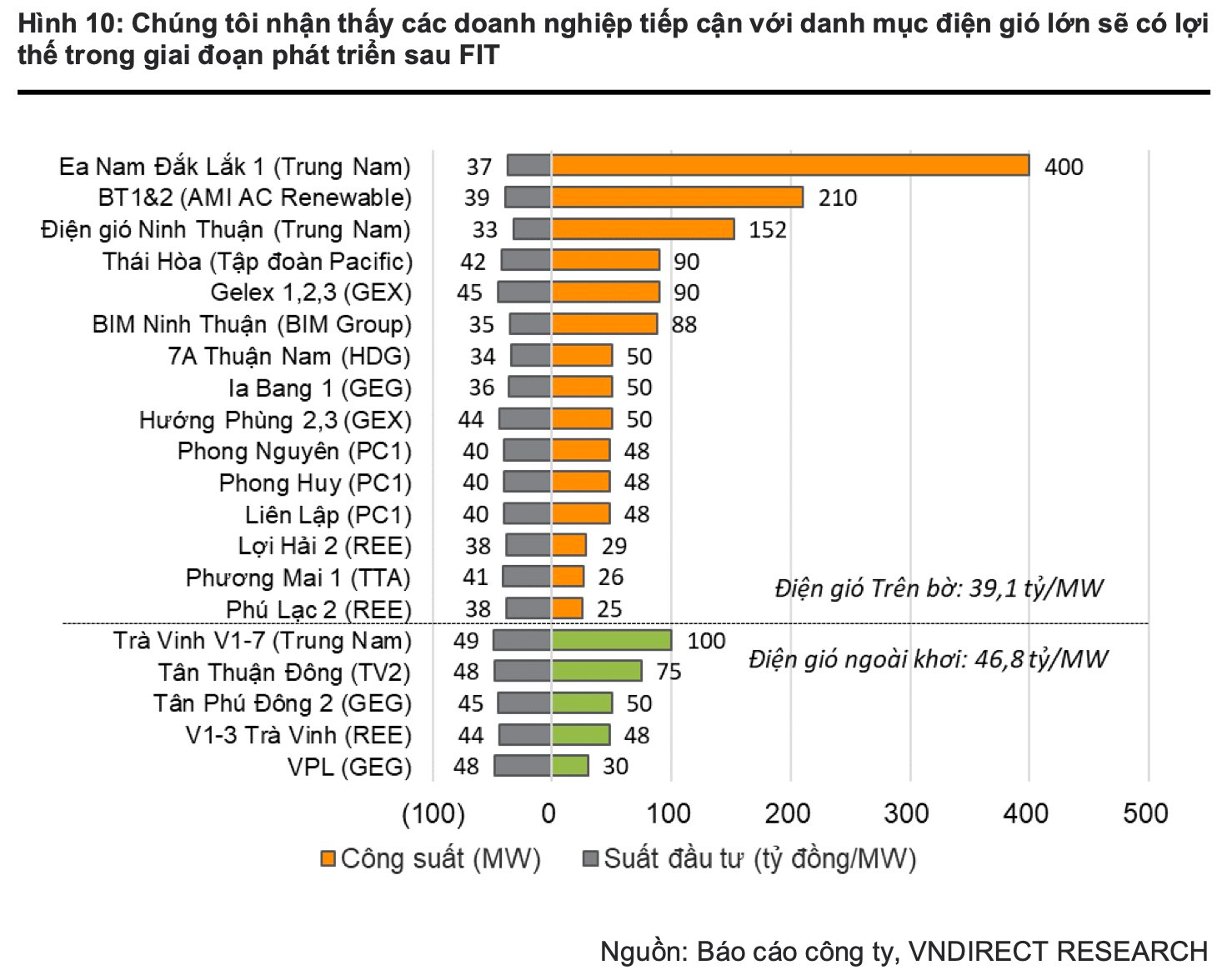
Further in 2023-2024, capacity cuts will improve. 2023 will be a springboard, marking a new growth phase of renewable energy when policies are issued, creating a premise for projects to start operating from 2024.
Gas power output will improve in 2023-24, underpinned by strong electricity demand growth
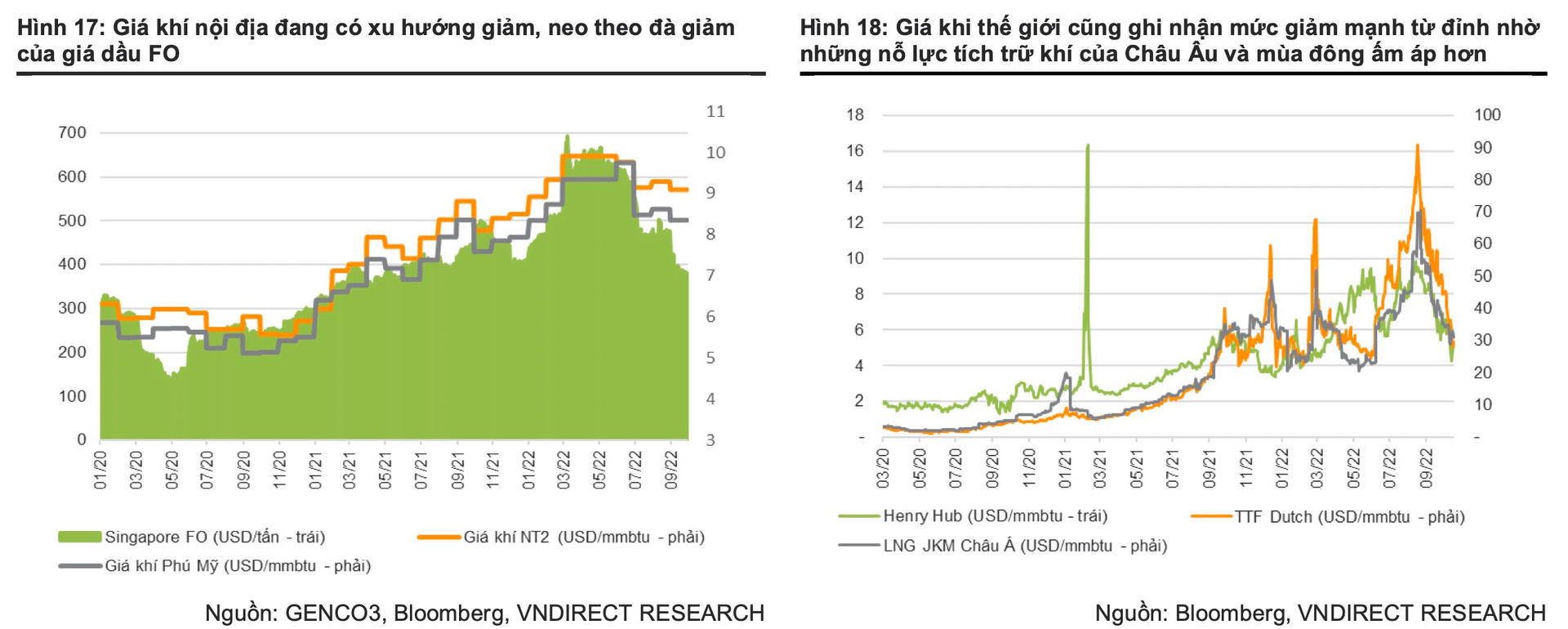
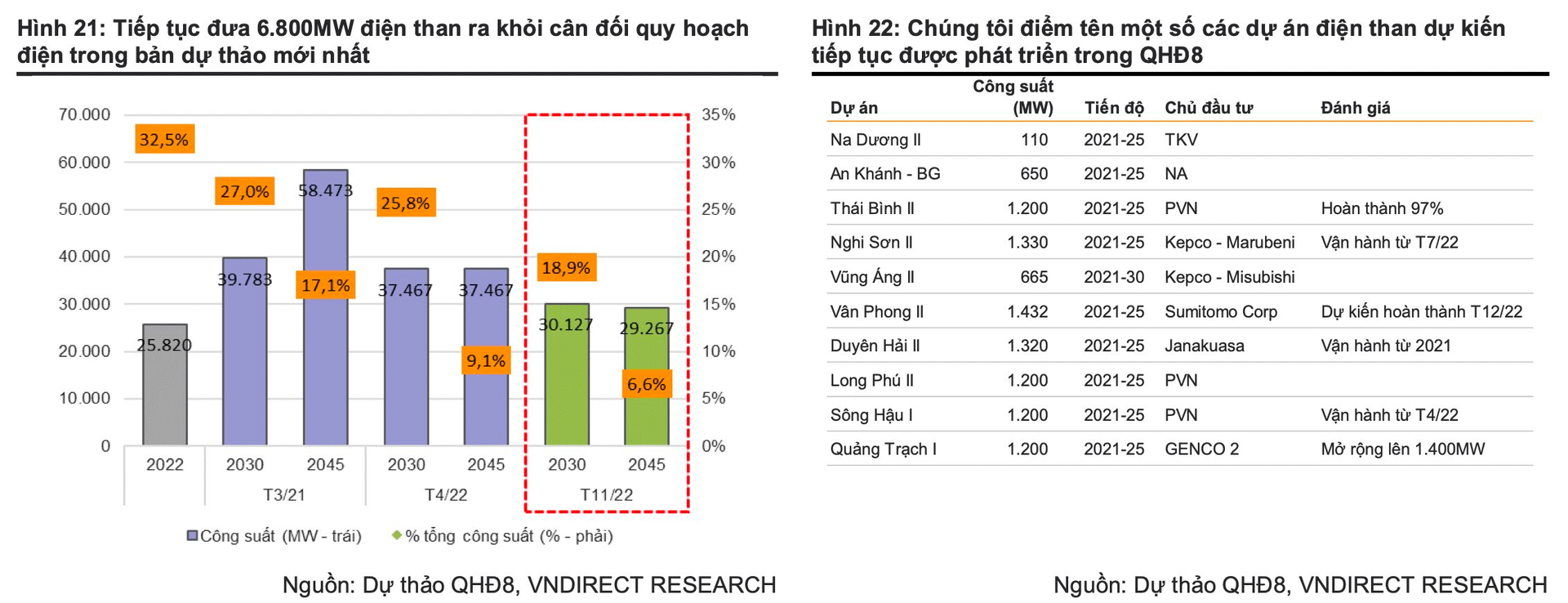
According to the draft PDP8, electrification will continue to be the spearhead in the period 2022-2035, and is not expected to develop further after that. Total gas power capacity will increase sharply from 7,300MW in 2022 to 46,330MW in 2035 with a compound growth rate for this period reaching 15.2%. Currently, the downward trend in gas prices is positive news for the gas power industry with the expected improvement in electricity mobilization, as well as the situation of PPA contract negotiations for upcoming projects.
VNDIRECT also expects a more positive deposit volume for gas-fired power, underpinned by growing electricity demand and a non-explosive hydroelectricity output. In addition, the recent decline in world gas prices will partly create more favorable conditions for upcoming LNG gas power projects to have the opportunity to negotiate and agree on terms of price and output – which which is still facing many difficulties and problems.
Coal power prospects are fading as further cuts in the new draft PDP8
Coal power output decreased, but VNDIRECT noticed a clear division by region, specifically, domestic coal-fired plants in the North all recorded a positive level of mobilized output thanks to cheap prices and proximity to coal sources. while factories in the South recorded a decrease in output due to oversupply in this region.
In the context that coal prices are expected to remain anchored high next year, it will be difficult to continue to expect a strong recovery of coal power in 2023. However, VNDIRECT sees less gloomy prospects. more for factories using domestic coal and mixed coal with lower price pressure than imported coal plants. Moreover, factories in the North will record more optimal output mobilization due to the forecast that electricity demand in this region will increase sharply in the coming years. On the contrary, factories in the South may still face competitive pressure from many power sources due to oversupply in the region.
However, in the short term, coal power still plays a very important role, and is a reliable and cheap source of background electricity, to ensure the safety of the system during the period of strong economic development of the country. Vietnam from now to 2030, however, the prospects are fading with the ability to access capital more difficult.
Hydropower will step out of favorable phase in 2023-2024
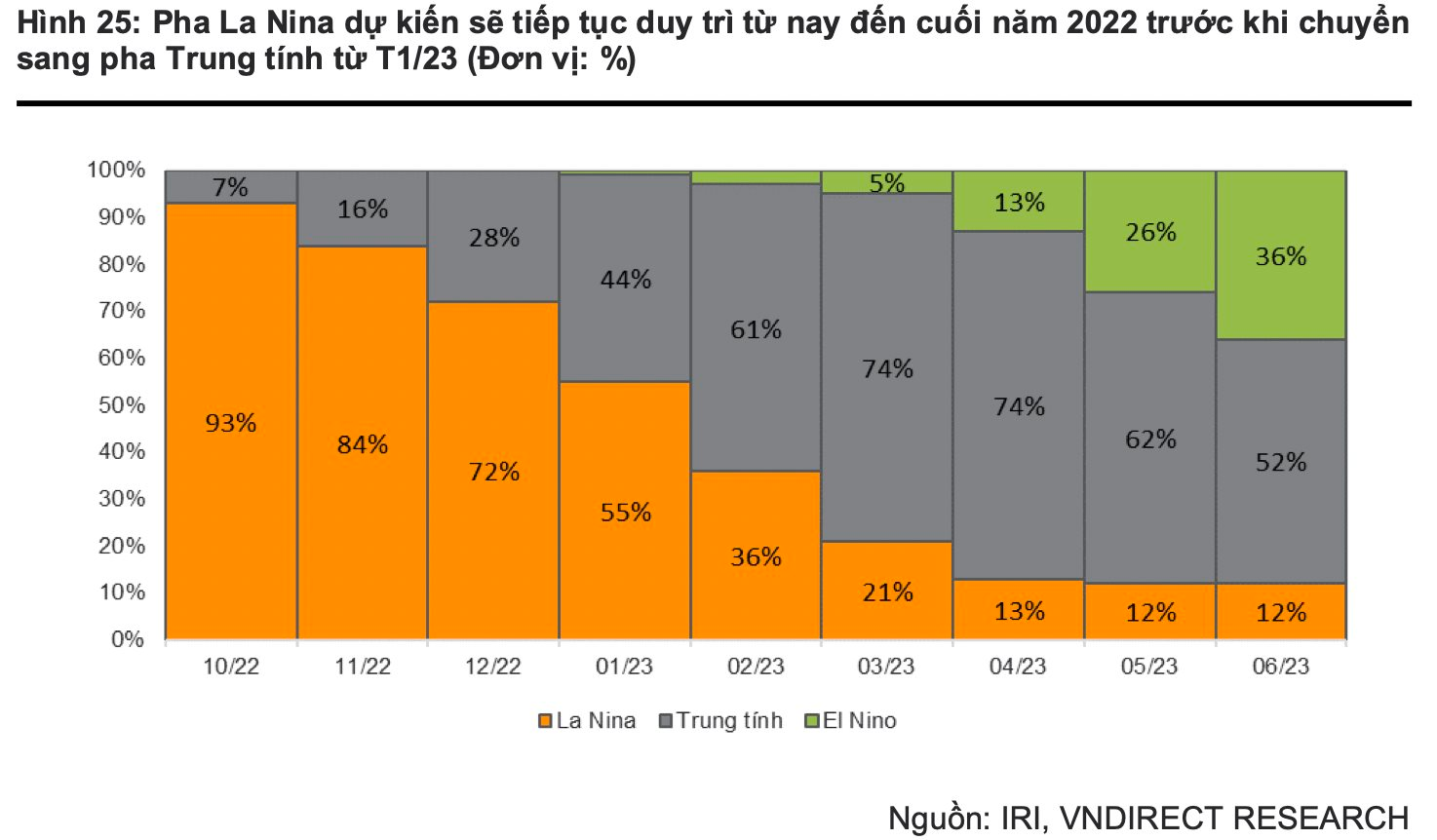
The probability for the La Nina phase to continue is quite low when this weather phase has lasted longer than expected. Therefore, VNDIRECT forecasts that hydropower will contribute a lower level of output from 2023-2024, creating a reserve for mobilizing other power sources. In terms of average electricity selling price, pushing up the mobilization price bracket of thermal power will simultaneously create conditions for hydroelectricity to be mobilized at a higher price in the competitive electricity market in the coming years.
However, the prospect of hydropower development is gradually drying up when the potential for capacity expansion of this power source has reached its limit. Excluding capacity expansion projects, Upper Kontum (220MW) is one of the last large hydropower plants in the planning, marking the end of the development of this power source. Although there is still room for about 6,000MW of small hydroelectricity (<30MW) in the coming period, this plant is highly dependent on weather and has poor regulation.
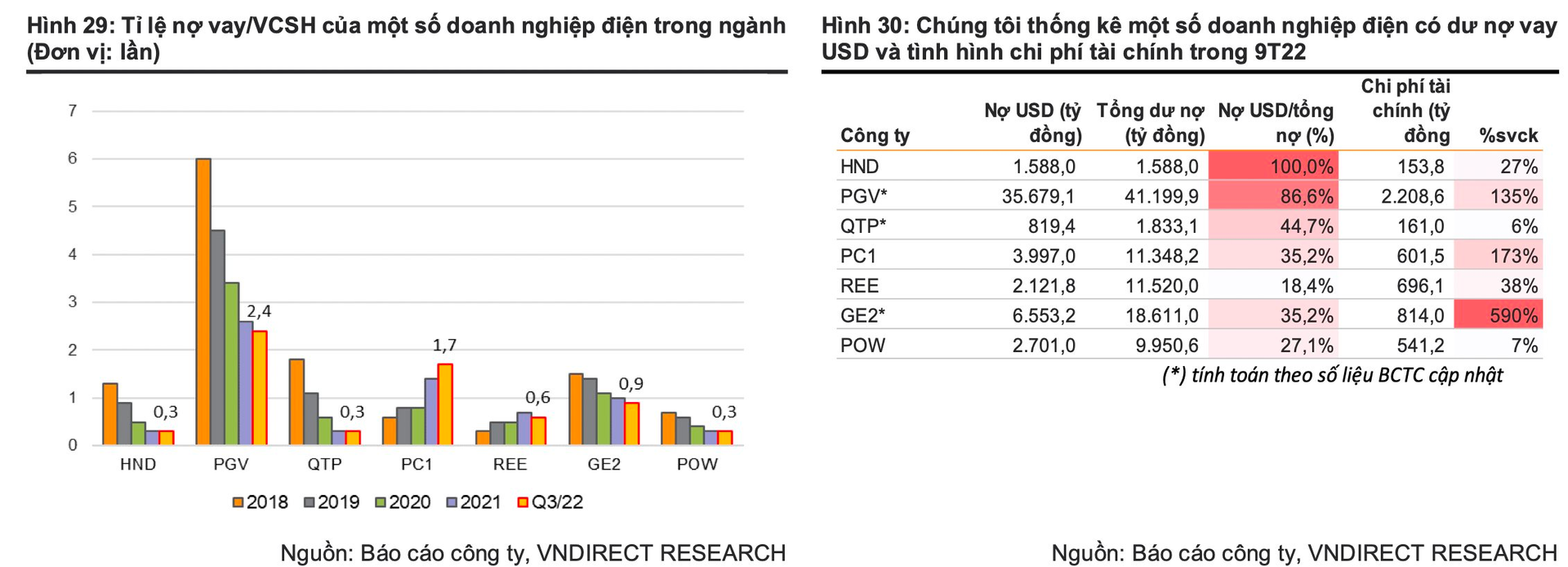
VNDIRECT also points to downside risks including lower-than-expected increase in power output and sharp increase in input prices, putting competitive pressure on thermal power sources. Regulation or electricity 8 and the slow promulgation of the RE pricing policy will also make the industry’s outlook less sharp, plus double pressure from exchange rates and interest rates. However, the degree of impact will be heavy or light depending on the debt ratio in USD as well as the interest rate policy of each business. Companies with high leverage, large proportion of USD debt with floating interest rate policy dependent on Libor will be more sensitive to each interest rate hike.
Phuong Linh/Market Lifestyle